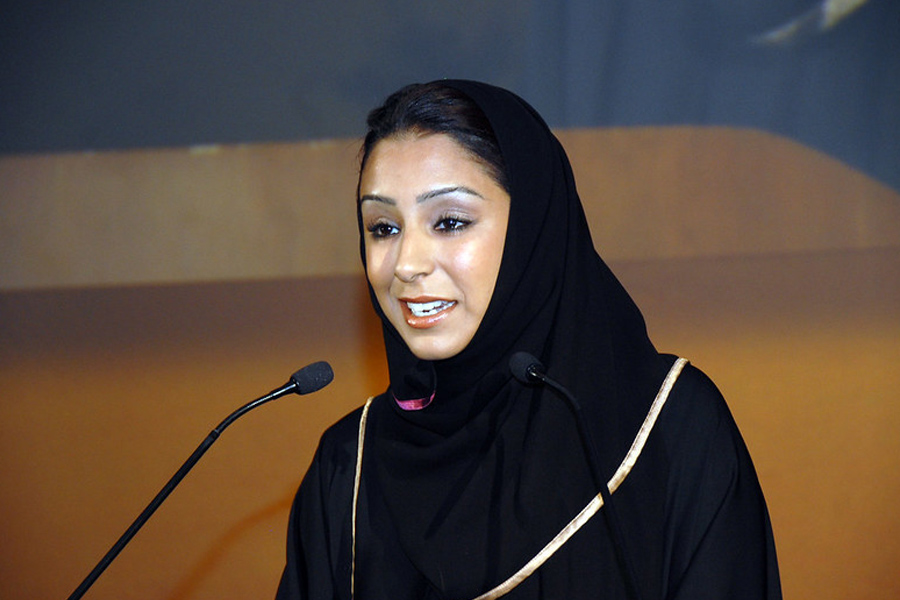
A life shaped by faith, family, and statecraft
When I look at Fatima Bint Mubarak Al Ketbi, I see more than a royal spouse or a ceremonial figure. I see a woman whose life sits at the center of a large national story. Born in 1943 in Al Hayer, near Al Ain, she came from a Bedouin background that valued discipline, dignity, and faith. That early world matters. It gave her a moral backbone and a patient style of leadership that later became unmistakable.
Her public identity is deeply tied to the rise of the United Arab Emirates. She became the wife of Sheikh Zayed bin Sultan Al Nahyan, the founding father of the UAE, and from that position she built an influence that reached far beyond palace walls. She earned the title “Mother of the Nation” because her work touched women, children, families, health, education, and social development with steady force. Her story feels like a river running beneath the desert, not always visible at the surface, but always shaping the land.
The family circle around Fatima Bint Mubarak Al Ketbi
Fatima Bint Mubarak Al Ketbi is central to one of the most prominent families in the Gulf. Her family life is not a side note. It is one of the strongest threads in her public identity. She and Sheikh Zayed had eight children, and many of them became major national figures.
| Family member | Relationship | Public role or significance |
|---|---|---|
| Mubarak bin Ghanim bin Dhahi bin Ghanim Al Ketbi | Father | Identified as her father in official commemorative records |
| Sheikh Zayed bin Sultan Al Nahyan | Husband | Founder and first President of the UAE |
| Sheikh Mohamed bin Zayed Al Nahyan | Son | President of the UAE and Ruler of Abu Dhabi |
| Sheikh Hamdan bin Zayed Al Nahyan | Son | Ruler’s Representative in the Western Region |
| Sheikh Hazza bin Zayed Al Nahyan | Son | Ruler’s Representative in Al Ain Region |
| Sheikh Tahnoun bin Zayed Al Nahyan | Son | Deputy Ruler of Abu Dhabi and National Security Adviser |
| Sheikh Mansour bin Zayed Al Nahyan | Son | Vice President, Deputy Prime Minister, and Chairman of the Presidential Court |
| Sheikh Abdullah bin Zayed Al Nahyan | Son | Deputy Prime Minister and Minister of Foreign Affairs |
| Sheikha Shamma bint Zayed Al Nahyan | Daughter | Public member of the family, with a more private profile |
| Sheikha Al Yazia bint Zayed Al Nahyan | Daughter | Public member of the family, with a more private profile |
I find this family structure remarkable because it shows both scale and continuity. The children occupy different lanes of public life, yet they form a single civic constellation. Some steer government, some diplomacy, some regional administration. Together they reflect a dynasty that is not frozen in ceremony, but active in the machinery of the state.
Sheikh Mohamed bin Zayed Al Nahyan is the most visible among them internationally, as he now leads the country. Sheikh Mansour bin Zayed Al Nahyan has become especially prominent in national government. Sheikh Abdullah bin Zayed Al Nahyan represents the UAE on the diplomatic stage. Sheikh Tahnoun bin Zayed Al Nahyan and Sheikh Hazza bin Zayed Al Nahyan carry key regional and security responsibilities. From the outside, the family looks like a branching palm tree, each limb reaching toward a different function, but all rooted in the same trunk.
Her public work and leadership style
Fatima Bint Mubarak Al Ketbi’s reputation went beyond speaking. She established it institutionally. GWU, SCMC, and Family Development Foundation were shaped by her. These groups structured slogans. She excels at that. Her principle becomes architecture.
Her advocacy for women is crucial. She backed the first women’s group in 1973. She created the General Women’s Union in 1975, a crucial step toward formalizing UAE women’s growth. Decades later, the national strategy for Emirati women linked legacy to future. Her leadership is quiet. It persists. It moves like wind-blown fine sand, changing the terrain gradually until it’s completely different.
She is also involved in the Fatima College of Health Sciences and family welfare, motherhood, childhood, and public service programs. That width counts. This is not her only cause. Her public existence encompasses a child’s birth, a mother’s care, a young woman’s chance, and an elder’s dignity.
Achievements that changed the national conversation
I think her achievements are best understood as a long chain rather than isolated moments. She received major honors for education, literacy, women’s rights, sustainable leadership, and humanitarian work. These awards did not create her influence. They recognized what had already been built.
One of the strongest examples is her role in supporting the Zayed Centre for Research into Rare Diseases in Children at Great Ormond Street Hospital through a major philanthropic gift. That act shows something important about her public character. She does not confine care to national borders. Her sense of responsibility reaches outward. In her hands, generosity becomes a tool of public medicine.
She also became a symbol of policy continuity. The UAE’s efforts around women, peace, and security, as well as the newer 2023 to 2031 empowerment strategy, show how her influence stretches into modern planning. Many public figures are remembered for a moment. She is remembered for a system.
A timeline of a long public era
Fatima Bint Mubarak Al Ketbi’s chronology resembles present Emirati societal development.
She was born in Al Hayer 1943.
Sheikh Zayed married her in 1960.
Women’s association began in 1973.
General Women’s Union, 1975.
2003 saw the Supreme Council for Motherhood and Childhood.
Sheikha Fatima Award for Excellence was established in 2005.
2014 associated her with child health philanthropy.
2021 and beyond clarified her links to women, peace, and security.
2023 brought her into a new national women’s empowerment initiative.
She appeared in international summits, honors, and messages in 2025 and 2026.
No short life story here. It is an evolving timeline. Some people become icons after death. She became one while active.
Why her family matters to her legacy
The family of Fatima Bint Mubarak Al Ketbi is not just notable because of titles. It matters because it shows how private life and public duty can merge. Her sons occupy the upper levels of state leadership, but their public roles are only one layer of the picture. The deeper layer is inheritance of values. Leadership, service, restraint, and continuity appear to have been taught at home before they were reflected in government.
Her daughters, though less visible in public records, remain part of the same family story. In a dynasty as prominent as this one, privacy itself becomes meaningful. Not every branch of the tree must be in the spotlight for the whole tree to be alive.
FAQ
Who is Fatima Bint Mubarak Al Ketbi?
Fatima Bint Mubarak Al Ketbi is a leading Emirati royal figure, the wife of Sheikh Zayed bin Sultan Al Nahyan, and widely known as the Mother of the Nation. She is recognized for her long public work in women’s empowerment, family welfare, child development, education, and humanitarian service.
How many children does she have?
She has eight children with Sheikh Zayed bin Sultan Al Nahyan. Six are sons and two are daughters.
Which of her children are most publicly known?
Her sons include Sheikh Mohamed bin Zayed Al Nahyan, Sheikh Hamdan bin Zayed Al Nahyan, Sheikh Hazza bin Zayed Al Nahyan, Sheikh Tahnoun bin Zayed Al Nahyan, Sheikh Mansour bin Zayed Al Nahyan, and Sheikh Abdullah bin Zayed Al Nahyan. They hold major leadership and government roles in the UAE.
What is she best known for?
She is best known for founding and supporting institutions that advanced women’s rights, motherhood, childhood, and family development in the UAE. She is also known for major charitable work and for shaping the national conversation on women’s empowerment.
Why is she called the Mother of the Nation?
She earned that title because of her enduring role in building social institutions, supporting families, and promoting women’s progress across decades. The phrase fits her public image because her influence feels protective, steady, and deeply rooted in care.
Portfolio Construction Strategies For Australian Crypto Investors
Beyond The Weekend Tidy Why Most Decluttering Projects Fail
Five Factors That Determine What Online Reputation Services Will Cost Your Business
Seeing The Bigger Picture Why Visual Communication Is Becoming A Strategic Business Skill