Anoland Diaz in the Historical Spotlight
I read the story of Anoland Diaz as one of those lives that moves like a bright current through several worlds at once. She was born in 1927 in Regla, Havana, and from the beginning her life was tied to sound, performance, and motion. I see her not as a footnote, but as a bridge between Cuba and Panama, between childhood fame and family life, between stage lights and the quieter labor of raising a household.
Her full name appears in several forms, including Anoland Bellido de Luna and Anoland Bellido de Luna-Caramés y Pérez, but the name Anoland Diaz is the one that carries through the family memory most clearly. She was a singer, pianist, actress, and radio performer. That combination matters. It means she did not belong to one narrow lane. She moved between voice and keyboard, between acting and music, like a bird changing altitude without losing direction.
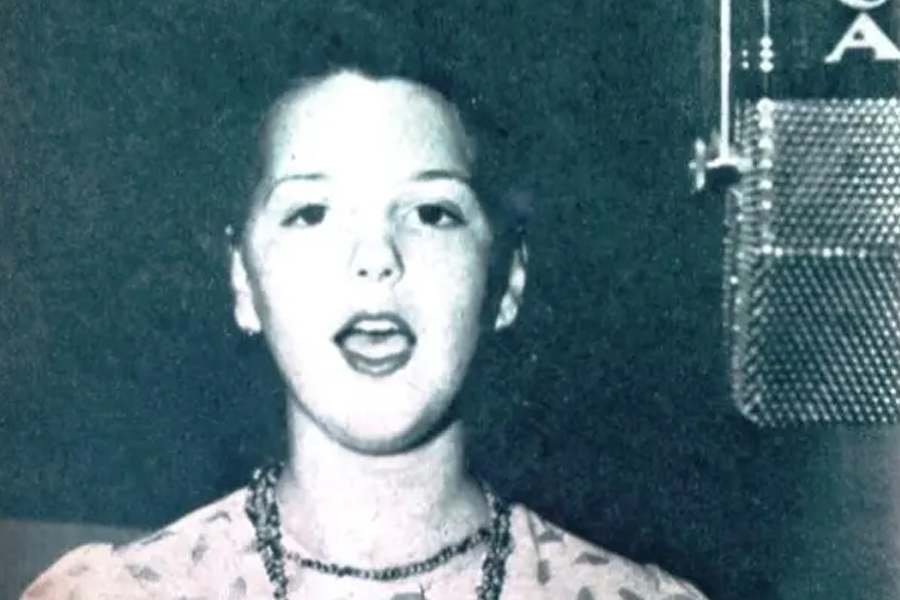
In the late 1930s, she was already active as a young performer in Cuban entertainment. By 1938 and 1939, she had appeared in talent programs and duo performances, and she was part of a film appearance as well. These early years suggest a child who was not simply talented, but remarkably visible. By the time she was a teenager, she had already carved her name into the public imagination.
Early Career in Cuba
I find the Cuban chapter especially vivid because it shows how early her artistic identity formed. She was associated with radio and live performance, including the talent program La Corte Suprema del Arte and the duo Myriam y Anoland. In that era, radio was like a river carrying voices into homes, and Anoland Diaz was one of the voices that traveled well.
Her work in Cuba also points to discipline. She was described as a soprano and pianist, which means her ability was not limited to one expressive form. Singing and piano require different muscles of attention. One lives in breath, the other in touch and timing. To move between them at a high level is its own kind of craftsmanship.
By 1940 and 1942, she was still active in Cuban broadcast culture. Those years matter because they show continuity. She was not a brief spark. She was a steady flame. That kind of persistence is often more impressive than fame alone.
Panama, Family, and a Life Beyond the Stage
In 1947, Anoland Diaz migrated to Panama. That decision altered her life. It was more than moving. A new root system. She sang, played piano, and acted in radio dramas in Panama. Perhaps she carried her art like a well-packed chest, opening it in a different country.
She built her family in Panama. She married Rubén Darío Blades Bosques, a percussionist, detective, and music enthusiast. The couple had five kids. That number is significant. Her life went beyond art and public. It was domestic, bustling, complex, and full of daily responsibilities.
I see her family as another stage without curtain calls but with lasting echoes. The household had music, discipline, travel, and identity. Her children inherited a surname and a rhythmic, performing, and remembered culture.
Family Members and Personal Relationships
Here is a simple map of the family that appears in the public record and the material above:
| Family member | Relationship to Anoland Diaz | Notes |
|---|---|---|
| Rubén Darío Blades Bosques | Husband | Percussionist, detective, music lover |
| Rubén Blades | Son | Musician, singer, songwriter, actor, activist, politician |
| Roberto Blades | Son | Musician |
| Luis | Child | Named in family accounts |
| Roy | Child | Named in family accounts |
| Melanie | Child | Named in family accounts |
| Joseph Verne | Grandson | Child of Rubén Blades |
Rubén Blades is the most widely known member of the family. He stands as both an artist and a public figure, and his connection to Anoland Diaz gives her story an even wider reach. I see this relationship as central, because it links her personal life to a larger cultural inheritance. Her voice did not vanish with her own performances. It continued through her son’s work and public identity.
Roberto Blades also belongs in this picture as another musical son. The family seems to have been built around sound, temperament, and memory. Even the lesser documented children, Luis, Roy, and Melanie, matter because they show the size of the family circle. Five children means a full household, a life with noise, schedules, hopes, and repetition. It means meals, quarrels, music in the background, and stories that multiply over time.
Joseph Verne, as Rubén Blades’s son, becomes Anoland Diaz’s grandson. That detail matters because it extends the family line into a new generation. It shows how legacy travels, not like a straight road, but like branches from the same tree reaching in different directions.
Career Achievements and Artistic Identity
Anoland Diaz did something rare: she transitioned from kid performance to adult art and remained culturally significant. She sang, played piano, acted, and did radio theater. Her adaptability in mediums was one of her greatest accomplishments.
Her voice in Maestra Vida with Rubén Blades is one of her most notable latter roles. Besides a recording credit, that appearance is symbolic. I read it as a family voice echoing across time. The mother and boy appear, evoking remembrance.
Archives, retrospective articles, and family tributes are used to commemorate her, not a huge list of commercial releases. It doesn’t reduce her value. It means her legacy lives in fragments, clips, recollections, and family narratives like mosaic pieces that yet make a vivid image.
Financial Life and Public Record
There is not much reliable public information about her finances, earnings, or assets. I would not force a story where the record is thin. What survives is not a ledger, but a portrait. I can say that her work in music and radio likely supported her life in part, but I cannot responsibly turn that into detailed financial biography.
That absence is itself revealing. Some lives leave contracts and bank records. Others leave songs, relatives, and memory. Anoland Diaz seems to belong to the second category.
Legacy and Later Recognition
The later recognition of Anoland Diaz often comes through her family and through renewed interest in Cuban and Panamanian cultural history. Her story has resurfaced in retrospectives, archival posts, and tributes linked to Rubén Blades’s public life. In that sense, she remains active in cultural memory long after the main stages of her career ended.
I see her legacy as twofold. First, she is part of the history of Cuban performance, especially radio and early entertainment. Second, she is part of a family narrative that remains important in Latin American music and public life. The two are inseparable. Her artistry shaped the family atmosphere, and the family line later carried her name forward.
FAQ
Who was Anoland Diaz?
Anoland Diaz was a Cuban-born singer, pianist, actress, and radio performer who later lived and worked in Panama. She was born in 1927 and became known first as a child performer, then as an artist with a longer family and cultural legacy.
Who was her husband?
Her husband was Rubén Darío Blades Bosques. He was described as a percussionist, detective, and music lover. Together they had five children.
How many children did Anoland Diaz have?
She had five children. The names mentioned in the material are Rubén Blades, Roberto Blades, Luis, Roy, and Melanie.
Is Rubén Blades her son?
Yes. Rubén Blades is identified as her son and is the most publicly recognized member of the family. He became a major musician, singer, songwriter, actor, activist, and politician.
Is Roberto Blades part of her family?
Yes. Roberto Blades is identified as another son of Anoland Diaz and is also a musician.
Who is Joseph Verne in relation to Anoland Diaz?
Joseph Verne is her grandson through Rubén Blades. That makes him part of the next generation of the family line.
What is Anoland Diaz best known for?
She is best known for her early work in Cuban radio and performance, her move to Panama, her continued work as a singer and pianist, and her role in a notable musical family that includes Rubén Blades and Roberto Blades.
Did she have a solo recording career?
The available material suggests that she did not release a large commercial solo catalog. Her legacy is better preserved through performances, archival references, radio work, and family memory.