How I first met the story
I remember the moment the story lodged in my throat like a pebble: a child shot in a family home, two parents gone, siblings left to stitch a life back together. I followed that pebble as it became a river of facts, dates, and faces. What I learned is not a neat chronicle of victim and villain. It is a braided account of loss, of legal reckoning, and of an adolescent athlete who chose movement as a way to speak.
The central figure: Landon
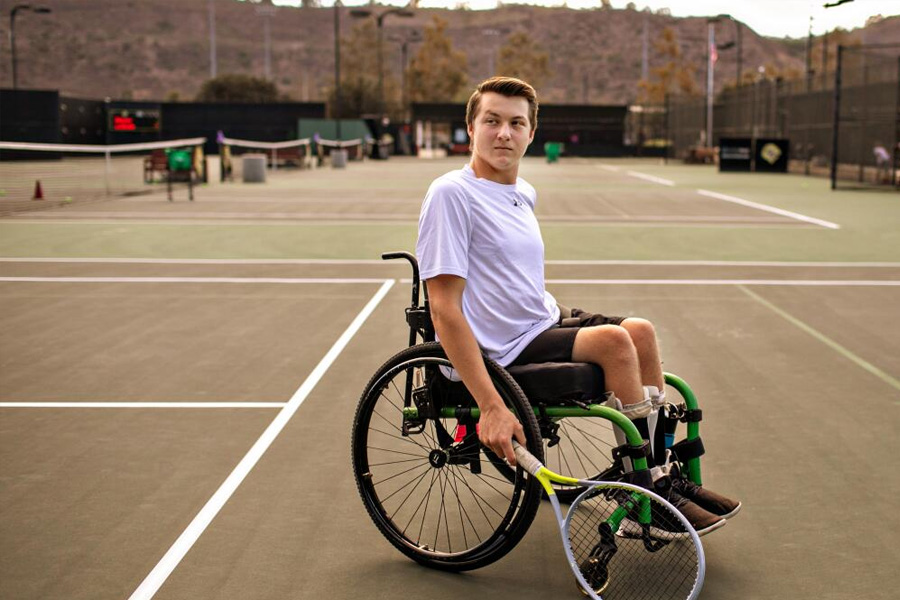
When the world changed in February 2014, Landon was a small boy. He was paralyzed from the waist down after being shot at age 8. Decades don’t fit a life so young, so I count the chapters: the February 9, 2014 gunshot; the years of recuperation and adaptation; and the steady rise of a tennis player who learnt to move the court from a wheelchair. His high school senior year of 2022 saw him acquire a Division 1 athletic scholarship to play wheelchair tennis. The dates and digits 2014, 2016, 2022, 2023 measure recuperation, achievement, and time.
The family I met on the page
The family is a constellation of names and roles. I will introduce each person as they appear to the public record and to my understanding.
- Ashton Sachs: The older brother whose actions on a winter night changed every life in the house. Criminal proceedings followed; a guilty plea and a lengthy sentence became part of the family’s legal ledger. His case is the linchpin that explains why other siblings became custodians of memory and responsibility.
- Brad Sachs: The father, one of two parents killed in the same incident that injured Landon. He is present in the narrative as loss and as the figure whose absence is felt in dates, court filings, and the quiet moments of those left behind.
- Andra Sachs: The mother, likewise killed that night. She is part of the family grief that propelled siblings into roles they did not choose.
- Myles Sachs: One of the older siblings who stepped into a guardian role. He managed family affairs, tended to younger siblings, and helped keep the household moving forward. When a family collapses around an event like this, Myles represents the practical scaffolding that keeps life upright.
- Alexis Sachs: A sister whose life, like the others, was rearranged by violence and legal aftermath. She appears in public coverage as part of the sibling group that stayed together.
- Lana Sachs: Another sibling whose presence is woven into the family story that persisted after the attack.
- JSerra Catholic High School: The high school Landon attended during his rise as a wheelchair tennis player. The school became a platform where athletic aspiration met community recognition.
- University of Arizona: The university that offered Landon a Division 1 wheelchair tennis scholarship. That offer is a concrete number in a narrative that often floats in impressions and emotion.
- San Juan Capistrano: The city where the family home once stood and where the events of February 2014 unfolded.
After the first list, I refer to these people and places plainly. Their names now feel like measures on a map I keep returning to.
The arc of rehabilitation and sport
Minutes, therapy, and tiny successes go from hospital bed to court. Landon learnt to transform tennis rhythm into a net-crossing language. Coaches helped him learn chair movement and enter junior wheelchair tournaments. I prefer to think of the tennis court as a platform for mapmaking from damaged geography. Rankings followed. A podium finish followed. A college scholarship turned a private battle into public aid for a player who had improved his motion.
Money, scholarships, and what numbers show
I do not pretend to possess bank ledgers or confidential filings. What public facts show are lines and dots: a multimillion-dollar house once in the family profile, the cost of a college education, and a scholarship that offsets tuition in a concrete way. When I speak of numbers they are signposts: 8 years old in 2014; a scholarship offer around 2022-2023; junior national rankings that placed him among the top young wheelchair athletes in the country.
A timeline table I keep on my desk
| Date | Event |
|---|---|
| February 9, 2014 | Shooting at family home in San Juan Capistrano; parents killed; Landon injured and paralyzed. |
| 2016 | Criminal plea entered by the older brother; legal process continues. |
| 2018-2021 | Siblings manage household and personal recovery, living largely out of the national spotlight. |
| December 5, 2022 | Profile pieces and community recognition highlight Landon as a rising athlete. |
| Early 2023 | Landon signs a Division 1 wheelchair tennis scholarship to a university. |
| 2023-2024 | Continued competition in junior wheelchair tournaments; national rankings and podium finishes. |
What the family life looks like to me
There are no simple adjectives left to describe them: resilient is one, complicated is another. The siblings survived not only a violent act but the slow grind of legal and financial sorting. I picture Myles balancing paperwork in one hand and practice schedules in the other. I imagine the sisters navigating grief while trying to keep the household steady. They became each other’s caretakers, advocates, and the steady audience for Landon’s matches.
The legal shadow that remains
A single act in 2014 created a legal arc that shapes the family story. Courtrooms, guilty pleas, and sentencing do not erase the memory of the night, but they provide a public ledger of accountability. For those left behind, justice is a formal entry; grief and reconstruction are the living work that follows.
FAQ
Who is Landon Sachs?
I view Landon as a young athlete and survivor. He was 8 years old when he was shot and became paralyzed from the waist down. Into that upheaval he poured the disciplined motion of sport and emerged as a nationally ranked junior wheelchair tennis player who accepted a college-level athletic scholarship.
Who are the members of Landon’s family?
The household includes his parents, who were killed during the 2014 incident, and siblings who stayed: Ashton (the older brother involved in the incident), Myles, Alexis, and Lana, among others. Each sibling took on roles after the tragedy, with Myles often stepping into a guardian role.
What happened on February 9, 2014?
On that date a shooting occurred at the family home in San Juan Capistrano. Two parents were killed and Landon was shot and left paralyzed. Criminal charges followed for an older brother who later entered a guilty plea.
What are Landon’s athletic achievements?
He rose through junior wheelchair tennis ranks, claimed podium results at national events, and accepted a Division 1 wheelchair tennis scholarship to a university in 2023. Those milestones are numbers that measure a trajectory from injury to competitive success.
Are there public financial details?
Specific personal financial records are private. Publicly visible facts include references to the family home and the presence of a college scholarship that offsets tuition costs. Exact dollar amounts for private accounts or investments are not publicly disclosed.
Where did Landon go to school?
He attended a high school in San Juan Capistrano that supported his participation in adaptive athletics and later matriculated to a university that offered him an athletic scholarship.
How has the family coped since the incident?
The siblings took on caregiving and administrative roles. They sought normalcy through routines like school and sport. The recovery process involved therapy, legal proceedings, and the intentional work of rebuilding daily life.
What does the future look like for Landon?
From where I stand, the future is athletic and scholarly: a student-athlete at college, continuing competition and academic development, while living inside a family story that carries both trauma and mutual support.