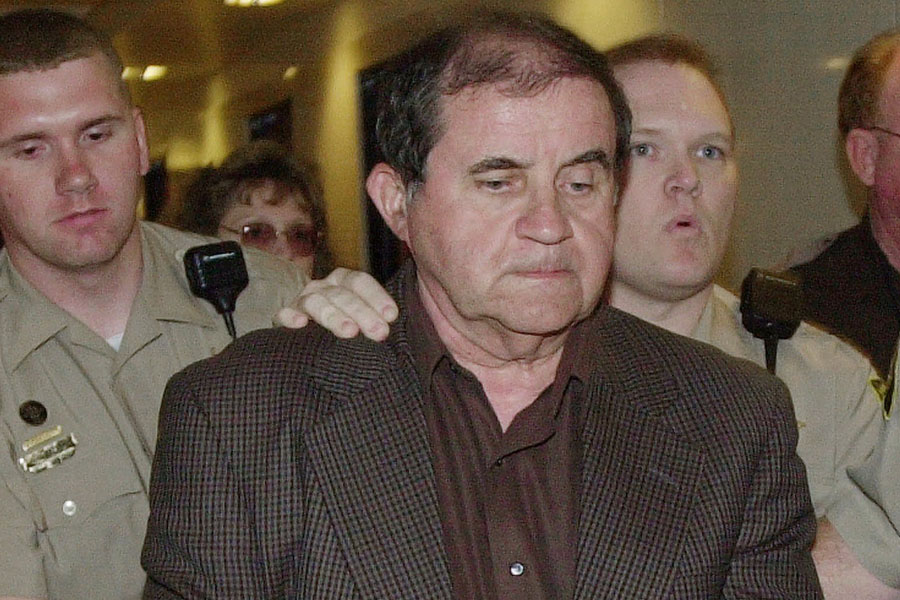
As I sit down to write about Thomas Edwin Blanton Jr., I feel a chill run through me, like stepping into a forgotten cellar where secrets fester in the dark. This man, born on June 20, 1938, in Washington, D.C., embodies a turbulent chapter in American history. He wasn’t a hero or a visionary. No. He was a convicted terrorist, a member of the Ku Klux Klan, whose actions scarred the soul of a nation. I remember first hearing about the 16th Street Baptist Church bombing in Birmingham, Alabama, back in my school days. It happened on September 15, 1963. Four young African American girls lost their lives that day: Addie Mae Collins, aged 14; Denise McNair, just 11; Carole Robertson, 14; and Cynthia Wesley, 14. The explosion injured over 20 others. Blanton, along with his accomplices, planted the dynamite that shattered lives and ignited outrage across the country. He evaded justice for decades, a ghost in the machine of a flawed system. Finally, in May 2001, at the age of 63, he faced conviction on four counts of first-degree murder. Sentenced to four life terms, he spent his remaining years behind bars at the William E. Donaldson Correctional Facility. He died there on June 26, 2020, from natural causes, six days after turning 82. Never paroled. No remorse shown.
Early Life and Influences
I often wonder how hatred takes root, like weeds choking a garden. For Blanton, it started early. His father, Thomas Edwin “Pops” Blanton Sr., born in 1883 and passing in 1967, loomed large in his life. Pops was a notorious racist in the Birmingham area, a man whose bigotry flowed like poison through family veins. He married Isabella Herbertson in 1915 in Jefferson County, Alabama. Together, they raised at least two children: Thomas Jr. and an unnamed daughter. Details on the sister remain elusive, a shadow in the family portrait. She might have lived quietly, untouched by the infamy that engulfed her brother. But Pops? He shaped Thomas Jr. into a mirror of his own prejudices. Growing up in the rural districts near Birmingham, young Thomas absorbed these views. He dropped out after the tenth grade. No college dreams. Instead, from 1956 to 1959, he served in the U.S. Navy as an aircraft mechanic. Honorably discharged, but no medals or stories of valor. Just a brief escape from the South’s simmering tensions. Back in Birmingham, he dove into the underbelly of white supremacy. The Klan called to him, a siren song of exclusion and violence.
Family Ties: The Blanton Lineage
Exploring Blanton’s family is like peeling an onion, each layer stinging with history. Patriarch Pops Blanton Sr. is central. He died at 84 in 1967 amid the Civil Rights upheavals his son would worsen. Pops was a forge, forging intolerance in his children. This lineage began with his 1915 marriage to Isabella Herbertson. Few mentions of Isabella offered the maternal thread. While women’s responsibilities were fixed, she bore the children and managed the household. Thomas Jr. took the name and made it famous. And sister? Records indicate her existence, yet she vanishes. She has no name, dates, or life story. She may have withdrawn herself or been overshadowed by her brother’s actions. Blanton never married, I believe. No wife to share his responsibilities, no children to inherit his poisoned heritage. He considered his Klan comrades “family” due to their secrecy and philosophy. Later, isolation, especially in prison, defined him. They called him lonesome. No visitors, no support letters. He faced the consequences alone after his blood kin disappeared.
To visualize the sparse family structure, here’s a simple table outlining the known members:
| Family Member | Birth Year | Death Year | Relation to Thomas Jr. | Notable Details |
|---|---|---|---|---|
| Thomas Edwin “Pops” Blanton Sr. | 1883 | 1967 | Father | Influential racist figure in Birmingham; shaped son’s views. |
| Isabella Herbertson Blanton | Unknown | Unknown | Mother | Married Pops in 1915; limited information available. |
| Unnamed Sister | Unknown | Unknown | Sister | At least one daughter mentioned in records; no further details. |
| Thomas Edwin Blanton Jr. | 1938 | 2020 | Self | Convicted in 2001; died in prison. |
This table starkly shows the gaps, the unknowns that haunt biographical pursuits.
The Criminal Alliances: Beyond Blood
Blanton was related to his criminal associates. I see them as wolves roaming society’s outskirts. “Dynamite Bob,” Robert Edward Chambliss, was convicted in 1977 and died in 1985. Bobby Frank Cherry died in prison in 2004 after 2002. In 1994, Herman Frank Cash died without trial. Though not related, these men could have been. White Klan robes and blazing crosses unite them. Their partnership led to the 1963 bombing. FBI recordings from 1964 and 1965 showed Blanton slurring and recounting the conduct without sorrow. Klan informant Mitchell Burns documented everything. Shared hate, not love or devotion, fueled these connections. Blanton’s life was entangled with theirs for decades. In 2001, Doug Jones, subsequently a U.S. Senator, prosecuted him. Trial illuminated these relationships’ darkness.
Career and the Absence of Achievement
What did Blanton do with his days? His “career” reads like a blank page, smudged with ink blots of malice. After the Navy stint from 1956 to 1959, he returned to Birmingham. No steady job detailed, just low-skilled work to scrape by. His real occupation? Klan activities. Organizing, plotting. The bombing wasn’t his first brush with violence, though it defined him. Finances? Modest at best. No wealth amassed, no properties listed. In prison from 2001 onward, his world shrank to cell walls. Parole denied on August 3, 2016, deferred to 2021, but death came first. Victims’ families opposed his release vehemently. He achieved nothing positive. No inventions, no community service. Just infamy. A life measured in destruction, not creation.
Timeline of Turmoil
Mapping Blanton’s life chronologically reveals a path of escalation and eventual downfall. Here’s an extended timeline:
| Year | Event |
|---|---|
| 1938 | Born on June 20 in Washington, D.C. |
| 1956-1959 | Serves in U.S. Navy as aircraft mechanic. |
| Early 1960s | Joins Ku Klux Klan in Birmingham. |
| 1963 | Bombs 16th Street Baptist Church on September 15, killing four girls. |
| 1964-1965 | Recorded by FBI discussing the bombing. |
| 1967 | Father, Pops Blanton Sr., dies. |
| 1977 | Accomplice Robert Edward Chambliss convicted. |
| 1985 | Chambliss dies. |
| 1994 | Accomplice Herman Frank Cash dies. |
| 2001 | Convicted on May 1; sentenced to life. |
| 2002 | Accomplice Bobby Frank Cherry convicted. |
| 2004 | Cherry dies in prison. |
| 2016 | Parole denied on August 3. |
| 2020 | Dies on June 26 at age 82. |
This sequence underscores the long shadow of his actions.
Recent Echoes and Remembrance
Even after death, Blanton’s name resurfaces. In 2020, news of his passing flooded outlets. Governor Kay Ivey called it a dark day, hoping for healing. Social media buzzed with reflections, tying his story to ongoing struggles against hate. In 2026, mentions crop up in discussions of modern extremism, analogies to church incidents or arrests. His legacy? A cautionary tale. I think of him as a relic, unearthed to remind us of progress and pitfalls.
FAQ
Who was Thomas Edwin Blanton Jr.?
Thomas Edwin Blanton Jr. was a Ku Klux Klan member convicted for the 1963 bombing of the 16th Street Baptist Church in Birmingham, Alabama. Born in 1938, he lived a life steeped in racism, influenced by his father. He served briefly in the Navy, then immersed himself in white supremacist activities. Convicted in 2001, he died in prison in 2020.
What is known about his family?
His family centers on his parents and a sibling. Father Thomas “Pops” Blanton Sr., born 1883, died 1967, was a racist influencer. Mother Isabella Herbertson married Pops in 1915. An unnamed sister exists, but details are scarce. No spouse or children for Blanton himself.
How did his criminal partnerships form?
Blanton’s key alliances were with fellow Klansmen: Robert Edward Chambliss (convicted 1977, died 1985), Bobby Frank Cherry (convicted 2002, died 2004), and Herman Frank Cash (died 1994 unconvinced). These bonds, rooted in shared ideology, led to the 1963 bombing.
What was his career like?
Limited. Navy service 1956-1959 as mechanic. Post-discharge, unskilled work in Birmingham. No notable achievements; life dominated by Klan involvement.
When did major events in his life occur?
Key dates: Born 1938; bombing 1963; conviction 2001; parole denial 2016; death 2020. Accomplices’ timelines interweave: Chambliss 1977, Cherry 2002.
Why is he remembered today?
His role in the bombing symbolizes Civil Rights-era violence. Recent mentions in 2020 and beyond link him to contemporary hate discussions, serving as a historical warning.